
Plumbing Jobs Made Easy: 7 DIY Fixes Anyone Can Do
Many everyday plumbing jobs are easy to do yourself with a few basic tools: unclogging a sink, cleaning a P-trap, fixing a running toilet, stopping a dripping tap, cleaning a showerhead or aerator, and resealing a bath. The key is to turn off the water first, work slowly, and call a licensed plumber for anything involving gas, sewage, or burst pipes.
Plumbing can seem scary, but most small problems in your home have simple causes and cheap fixes. Learning a handful of basic repairs saves you money, stops small leaks from turning into big bills, and gives you the confidence to handle problems the moment they appear. This guide walks you through seven beginner-friendly jobs, step by step.
Before You Start: The Golden Rules
Every plumbing job, however small, starts with the same three steps.
1. Find your shut-off valves. Your home has a main stop valve, usually under the kitchen sink, near the water meter, or where the supply pipe enters the house. Most sinks and toilets also have their own small isolation valves. Turn them clockwise to shut off the water.
2. Protect the area. Lay down an old towel and keep a bucket handy. Even a "dry" pipe holds some water.
3. Take photos as you go. Snap a picture before you take anything apart. It makes reassembly much easier.
Your Basic Plumbing Toolkit
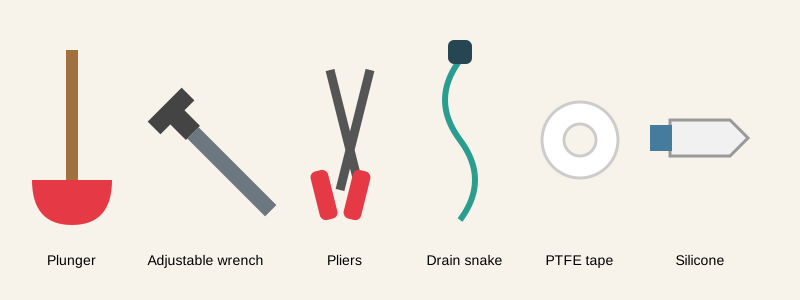
You don't need a van full of equipment. These tools handle almost every job in this guide:
- Cup plunger for sinks and a flange plunger for toilets
- Adjustable wrench and slip-joint pliers
- Drain snake (a cheap plastic one works for hair clogs)
- Screwdrivers, both flat-head and Phillips
- PTFE (plumber's) tape for sealing threaded joints
- Bucket, old towels, and rubber gloves
- Silicone sealant and a caulking gun
1. Unclog a Sink With a Plunger
A slow or blocked sink is the most common plumbing problem in any home.
- Remove the sink stopper and clear any visible debris.
- If it's a double sink or has an overflow hole, block the other opening with a wet cloth so the plunger creates suction.
- Fill the sink with a few centimetres of water to cover the plunger cup.
- Plunge firmly up and down 15 to 20 times, then pull away sharply.
- Run hot water to check the flow. Repeat if needed.
Tip: Avoid mixing chemical drain cleaners with plunging. If chemicals are already in the pipe, they can splash onto your skin.
2. Clean a Blocked P-Trap
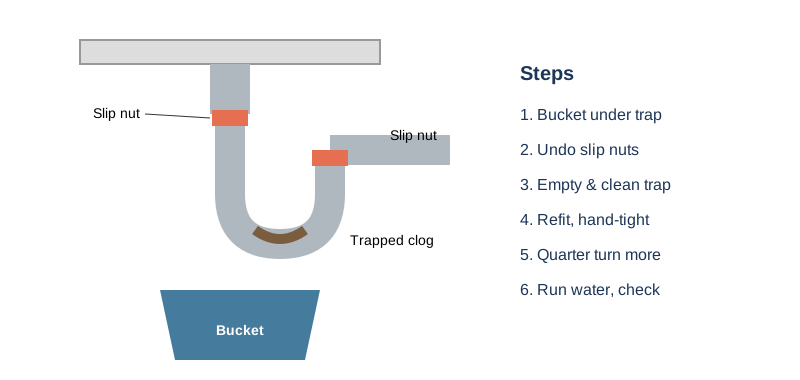
If plunging doesn't work, the clog is probably sitting in the P-trap: the U-shaped pipe under your sink.
- Place a bucket directly under the trap.
- Unscrew the two slip nuts by hand or with pliers.
- Remove the trap and empty it into the bucket.
- Clean it out with an old toothbrush and hot, soapy water.
- Refit the trap, hand-tighten the nuts, then add a quarter turn with pliers.
- Run water and check for drips.
3. Fix a Running Toilet
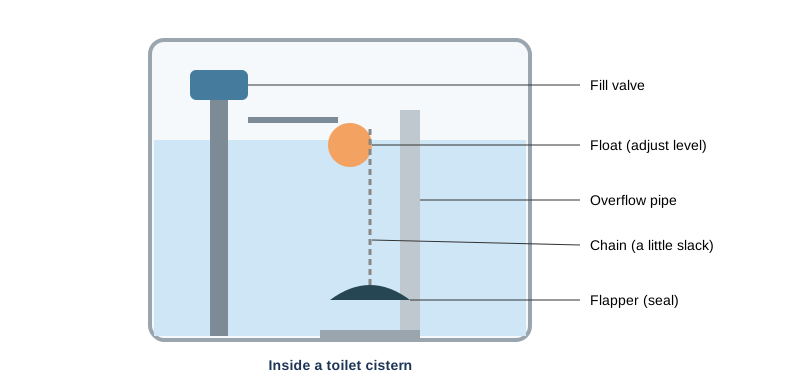
A toilet that keeps running can waste a lot of water every day. The culprit is usually the flapper or fill valve.
- Lift the cistern lid and flush. Watch what happens.
- If water leaks into the bowl after the tank fills, the flapper (the rubber seal at the bottom) is worn. Turn off the water, flush to empty the tank, unhook the old flapper, and clip in a matching new one.
- If water flows into the overflow pipe, the water level is set too high. Adjust the float on the fill valve downward until the water stops about 2.5 cm (1 inch) below the top of the overflow pipe.
- If the chain is tangled or too tight, adjust it so there's a little slack.
Flappers are cheap and usually take less than 10 minutes to replace.
4. Stop a Dripping Tap
Drips usually come from a worn washer (older taps) or a worn cartridge (modern single-lever taps).
- Turn off the water to the tap and open it to drain any remaining water.
- Put the plug in the sink so small parts can't fall down the drain.
- Pry off the decorative cap and unscrew the handle.
- Use a wrench to undo the valve or cartridge.
- Take the old washer or cartridge to a hardware store to get an exact match.
- Fit the new part, reassemble, and turn the water back on slowly.
5. Clean a Showerhead or Tap Aerator
Weak, sputtering flow is often caused by limescale, not a pipe problem.
- Unscrew the aerator from the end of the tap, or remove the showerhead.
- Soak it in white vinegar for one to two hours. If you can't remove a showerhead, tie a bag of vinegar around it.
- Scrub with an old toothbrush, rinse, and screw it back on.
6. Reseal Around a Bath or Shower
Cracked or mouldy sealant lets water seep behind tiles and into floors.
- Cut away the old sealant with a utility knife and remove the residue.
- Clean and fully dry the joint.
- Fill the bath with water first. This weighs it down so the seal won't crack later.
- Apply a steady bead of bathroom silicone and smooth it with a wet finger.
- Leave it to cure for at least 24 hours before using the shower.
7. Seal a Leaky Threaded Joint
A small drip from a threaded pipe joint can often be fixed in minutes.
- Turn off the water and undo the joint.
- Wrap PTFE tape clockwise around the male threads, three to five times.
- Reconnect and tighten firmly, without over-tightening.
When to Call a Professional Plumber
DIY is great for small jobs, but some problems need a licensed plumber. Call a professional if you notice:
- A burst pipe or water coming through a ceiling
- Sewage backing up, or several drains blocked at once
- No hot water or a leaking water heater
- The smell of gas (leave the house and call your gas emergency line)
- Any job that needs pipes cut, soldered, or moved
Frequently Asked Questions
What plumbing jobs can I do myself? Unclogging drains, cleaning P-traps, replacing toilet flappers, fixing dripping taps, cleaning aerators, and resealing baths are all safe beginner jobs.
Do I need to turn off the water for small repairs? Yes. Always turn off the water at the nearest valve before taking anything apart.
Is PTFE tape the same as plumber's tape? Yes. PTFE tape, Teflon tape, and plumber's tape are the same product, used to seal threaded joints.
The Bottom Line
Plumbing jobs made easy comes down to preparation: know your shut-off valves, keep a small toolkit, and fix problems early. With these seven skills, you can handle most everyday issues yourself, and you'll know exactly when it's time to call in a pro.